
Introduction — a small shop, a big cloud, and one clear question
I remember walking into a community makerspace one afternoon and finding the laser bench shrouded in a lazy haze. The operator shrugged and said, “It’s just the smell,” but nearby people were coughing and stepping back. In many workshops, that casual shrug hides real exposure: smoke, VOCs, and ultrafine particulate matter that can linger long after a cut. I’ll be honest—I’ve seen this enough to know it matters to health and to product quality.
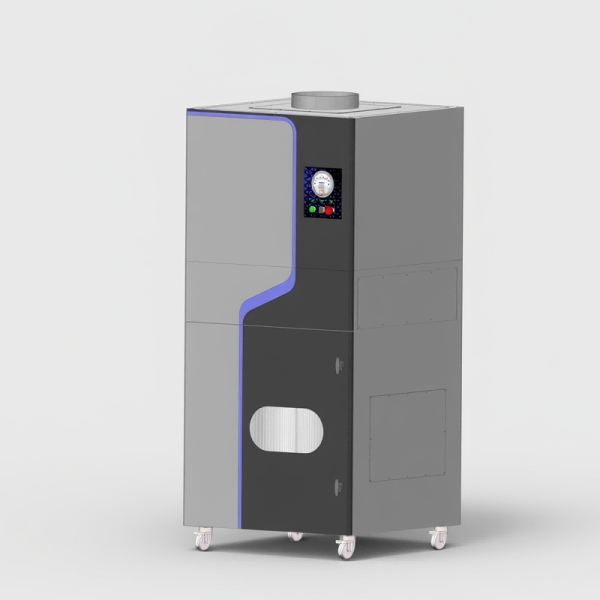
When you talk about controlling that haze, many people reach for a laser cutter fume extractor as a plug-and-play fix. Yet the term covers a wide range of devices: from simple fans to full systems with HEPA filter stages and activated carbon beds. Even basic numbers matter here—airflow measured in CFM, filter efficiency ratings, and capture velocity at the nozzle determine how well a unit performs. So: how do you tell which extractor will actually clear the air in your space and protect your team, not just mask the smell? I want to walk you through that, in plain terms, step by step (and yes, I’ll point out the traps I keep seeing). Let’s move to the technical contrast—what works, and why it sometimes doesn’t.
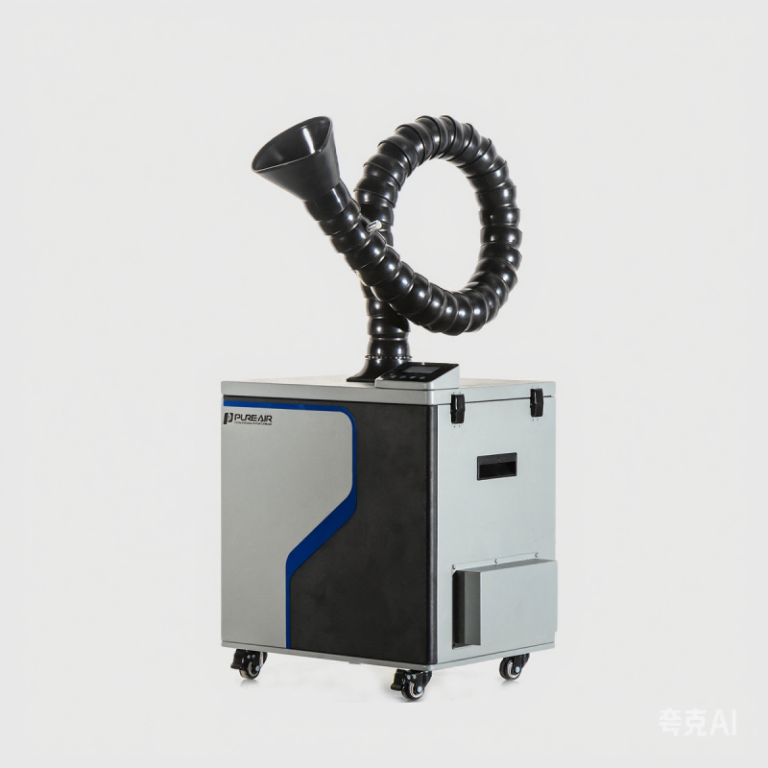
Part 2 — Why common fixes fail: a technical look at laser cutting fume extraction
When we examine laser cutting fume extraction systems up close, a few failure modes keep repeating. First, undersized fans: units sold on the promise of “quiet” often lack sufficient CFM to capture the plume at the source. Next, staged filtration is sometimes skipped—skimping on a HEPA filter or activated carbon stage cuts down on cost but leaves VOCs and ultrafine particles in the room. Finally, poor ducting layout and weak capture velocity let smoke escape before the filter ever sees it. I say this from experience—I’ve tested setups that looked tidy but performed poorly on particle counters.
Why does that happen?
Part of the problem is that vendors and users focus on single metrics—noise level, or filter life—rather than system balance. You need matched components: capture hood design, exhaust fan power, filtration media, and proper duct runs. Without that balance, the system creates false confidence. Look, it’s simpler than you think: think in terms of capture, transport, and filtration. Capture is about hood geometry and velocity. Transport is about ducting and CFM. Filtration is about media ratings and service intervals. Miss any of the three and the whole chain weakens. We also have to watch for secondary issues—ozone generation from certain laser sources, pre-filter bypass when maintenance is delayed, and the build-up of sticky residues that reduce airflow. These are technical headaches, but fixable if you inspect and plan.
Part 3 — Looking ahead: practical steps and three metrics to choose by
Moving forward, I focus on practical improvements and realistic upgrades. Many shops can gain a lot by improving capture hood design and matching a higher-CFM fan—even modest changes reduce visible smoke and measurable PM2.5 levels. Newer systems add smart monitoring—pressure gauges for filter load, flow sensors, and simple alarms that tell you when airflow drops. These aren’t flashy; they make maintenance predictable and protect filter life. I encourage a phased approach: start with capture and airflow. Then add filtration stages tuned to your materials—metal cutting may need robust particulate capture, while engraving acrylics calls for activated carbon to remove odors and VOCs.
What’s next for users and makerspaces? Expect more modular extractors with swappable filter cassettes and sensors that report CFM and filter resistance. That helps operators replace filters only when needed—saving money and ensuring performance. Another trend: compact units that combine local capture with a small duct to an external exhaust when possible. That reduces recirculation of contaminants. — funny how that works, right? Also, training matters. I’ve taught many teams who were surprised how a small change in hood position cut exposure in half. — and we all felt better about the work.
Three key metrics I use when evaluating systems
1) Capture velocity at the nozzle (aim for consistent airflow across the capture face). 2) Effective CFM matched to the hood geometry and duct length. 3) Filter staging and media—HEPA for particulates, activated carbon for VOCs, and pre-filters to protect the main media. Use these three as your checklist when comparing units. In short: measure capture, measure transport, and verify filtration. That’s how you separate hype from real protection. If you want a tested partner in this space, I recommend checking solutions from PURE-AIR—they’ve focused on balanced systems and real-world usability. I’ll help you think through options if you want to compare specs next; I enjoy that part of the work, honestly.